Electronic cigarettes, or vaping have become more widely used in recent years which has raised questions about the safety and security of these products. One of the major concerns is secondhand exposure to vaping, which is particularly worrisome in indoor spaces like schools, homes, and workplaces. Vape detectors are able to detect indoor vaping and aid in addressing the problem. This article will discuss the different types of vape detectors along with their capabilities and the way they work in various situations.
Vape detectors are electronic devices that use sensors to detect the presence of smoke from vape or particles that are in the air. The devices provide a quantitative assessment of the vape emissions that are produced indoors, which is useful for enforcing smoking bans and determining vaping zones. There are many types of vape detection devices like those that can be utilized in schools, homes, and in public spaces.
Vape detectors for home use are becoming more popular with families that want to shield their children from the dangers of second-hand smoke. They are small, discrete, and can be used anywhere in the house where smoking will likely be a regular occurrence. This includes bedrooms and living rooms. The detectors can be equipped with a variety of sensors. PM2.5 sensors are employed to detect the particles that vaping devices emit. A lot of vape detectors for homes come with smartphone apps to inform you of vaping detected.
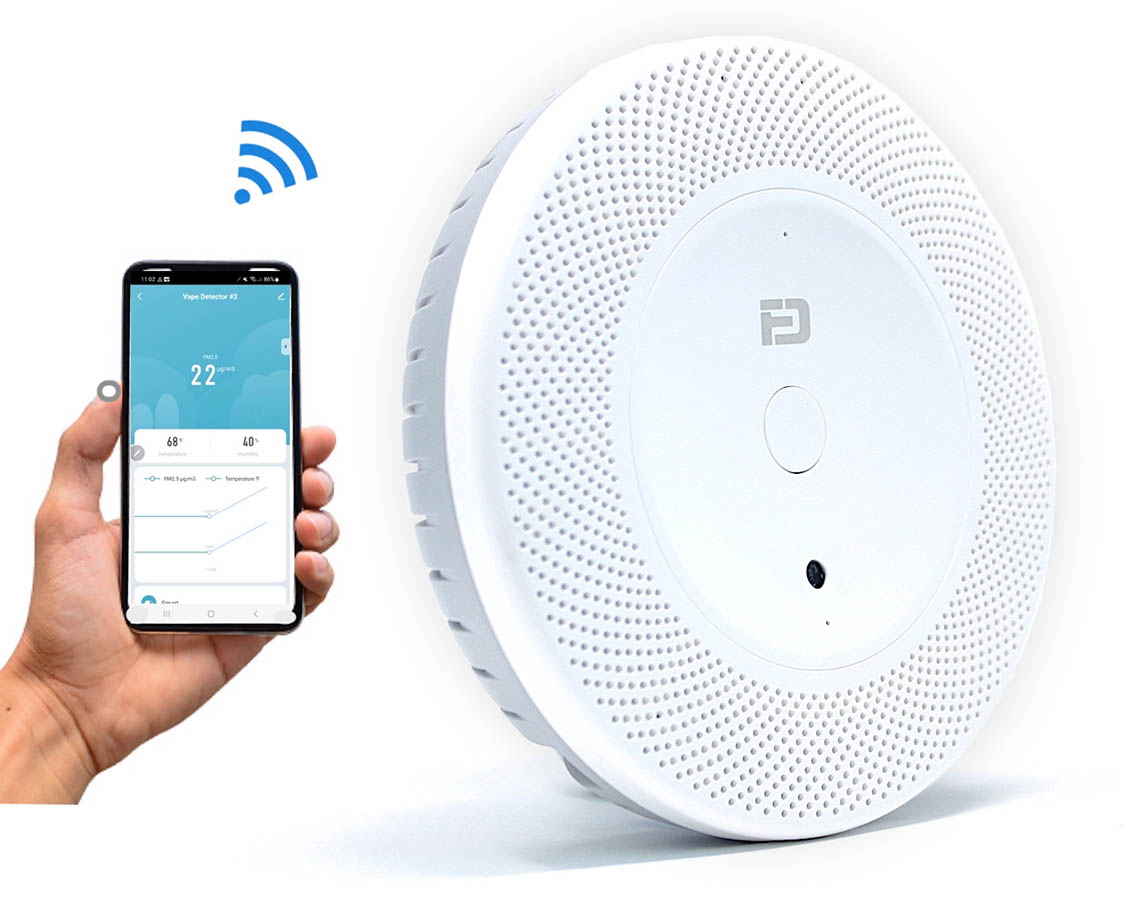
Schools are another setting where vape detectors can be utilized to tackle the issue of indoor vaping. A lot of schools have enacted no-smoking rules, and also prohibit the use of vaping devices. Vape detectors can help administrators enforce policies by identifying areas where students may be smoking. These devices are typically placed in public areas like bathrooms, hallways, or locker rooms. They may also be connected to central monitoring systems that notify administrators when vaping has occurred or been identified.
For more information, click vape detector for schools
They are far more sophisticated than the ones specifically designed for homes because they cover a wider area and can differentiate between vaping (and other types of smoke) and particles. The sensors are a combination comprising laser-scattering and other sensors which detect vaping. They give accurate readings. Some models can distinguish between different types of vaping devices, like vape pens and e-cigarettes.
Vape detectors are often found in public areas such as casinos, hotels as well as offices. They are designed to create a secure and healthy environment for employees and guests by monitoring indoor air quality and detecting the use of vape. They can be installed in common areas such as lobbies, conference rooms, and break rooms. They can offer real-time data on the indoor air quality.
Laser scattering technology is among the most essential features of vape detectors. They are able to detect particles of vaping smoke. This technology is extremely sensitive and can detect small quantities of vape in the air. The device operates by shining beams of light through the air, allowing it to detect scattered light emitted by particles. These devices allow vape detectors to provide extremely precise measurements of the quality of air in the indoor environment and pinpoint areas where vaping is occurring.
Vape detectors designed for home use are also equipped with a crucial feature: they are linked to mobile apps that notify users in real time whenever vaping has been identified. This can be extremely beneficial for parents who want to monitor the indoor vaping practices of their children or to school administrators looking to alert them when students are vaping. Certain vape detectors have cloud-based storage of data that is helpful for monitoring trends and identifying areas in which additional attention is required.
Vape detectors are a reliable way to monitor and detect indoor smoking in homes or schools as well as other public areas. They’re equipped with sensors and other technology which provide precise readings of the quality of air inside. Smartphone apps can be used to get real-time alerts.
Vape detectors guard those who are exposed to indoor air pollution. By removing distractions, they let us concentrate on monitoring and sustaining the best quality of air we can get. Vape detectors are fairly new and their effects require further research. However, it’s thought they may have the capacity to improve indoor air quality and our overall health. Vape detectors have proved in the past to be adept at capturing and reducing harmful substances like volatile organic compounds (VOCs), carbon monoxide (CO), and ultrafine particulate matter (PM2.5). Vape detectors can identify vaping products with greater precision than before. Vape detectors have a positive impact on both health and safety. As this innovative technology continues to grow in usage, it could one day help us safeguard our families from unnecessary risks related to secondhand smoking or vaping inside our homes.